Smart Mobility Hub,
Stuttgart / Deutschland

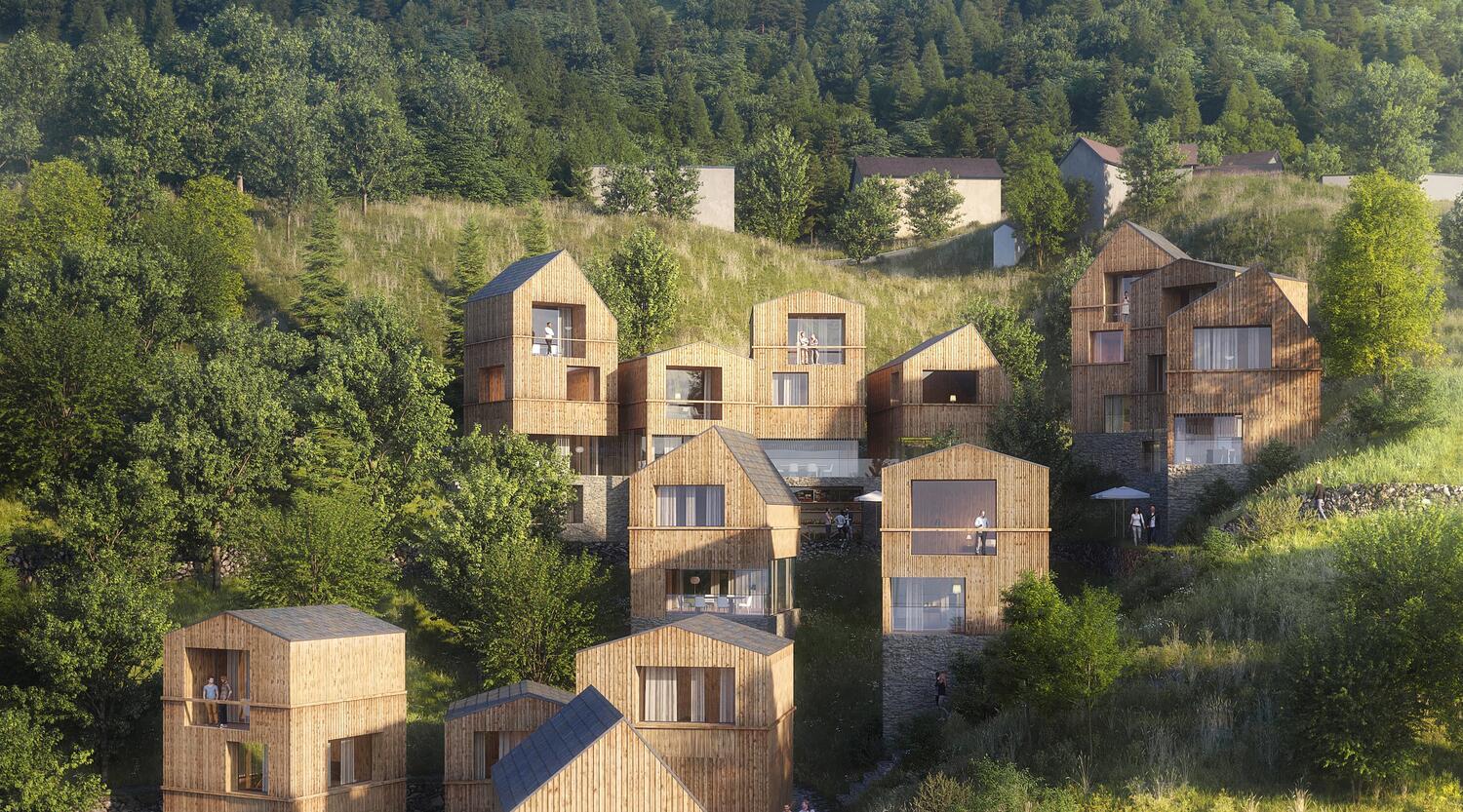
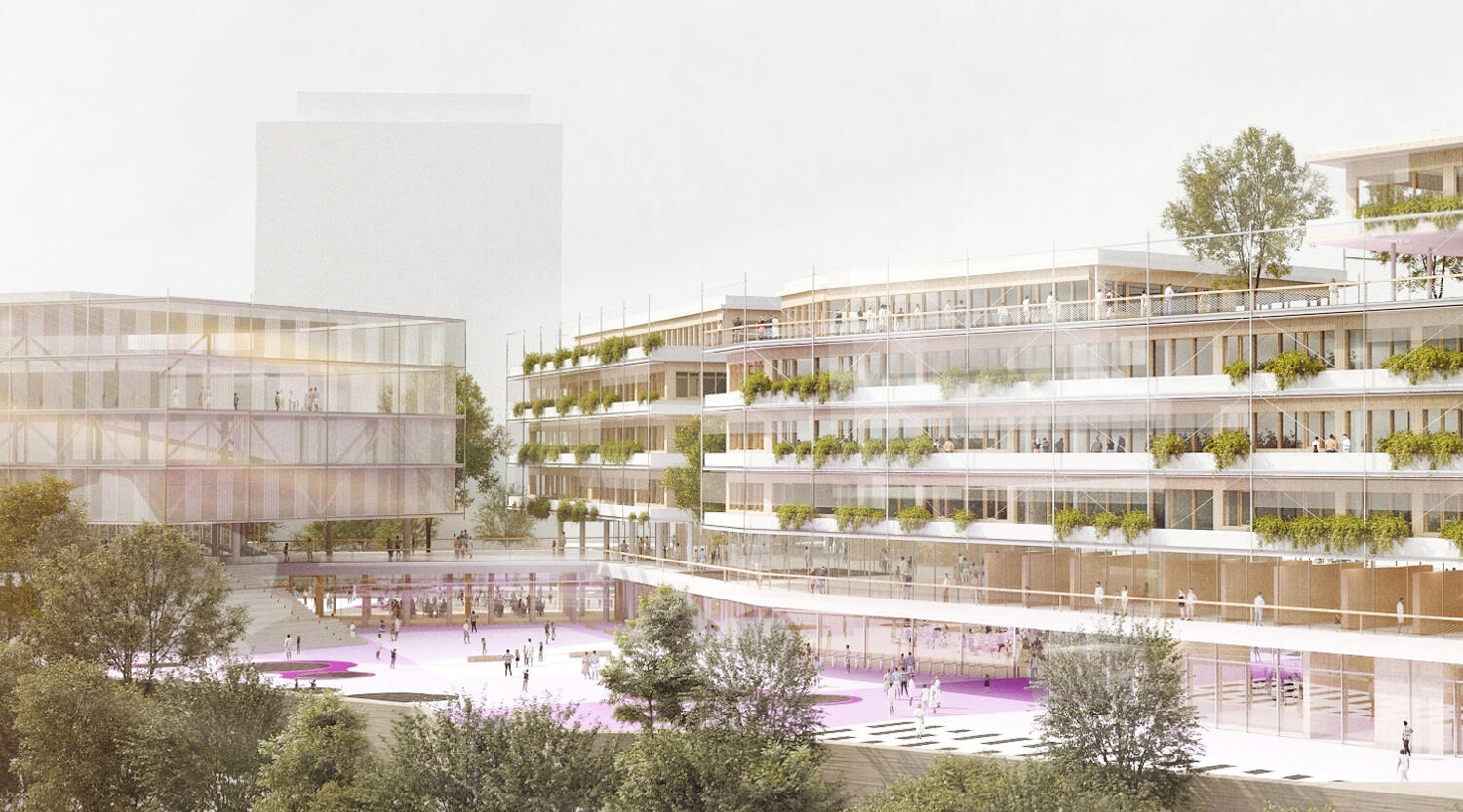
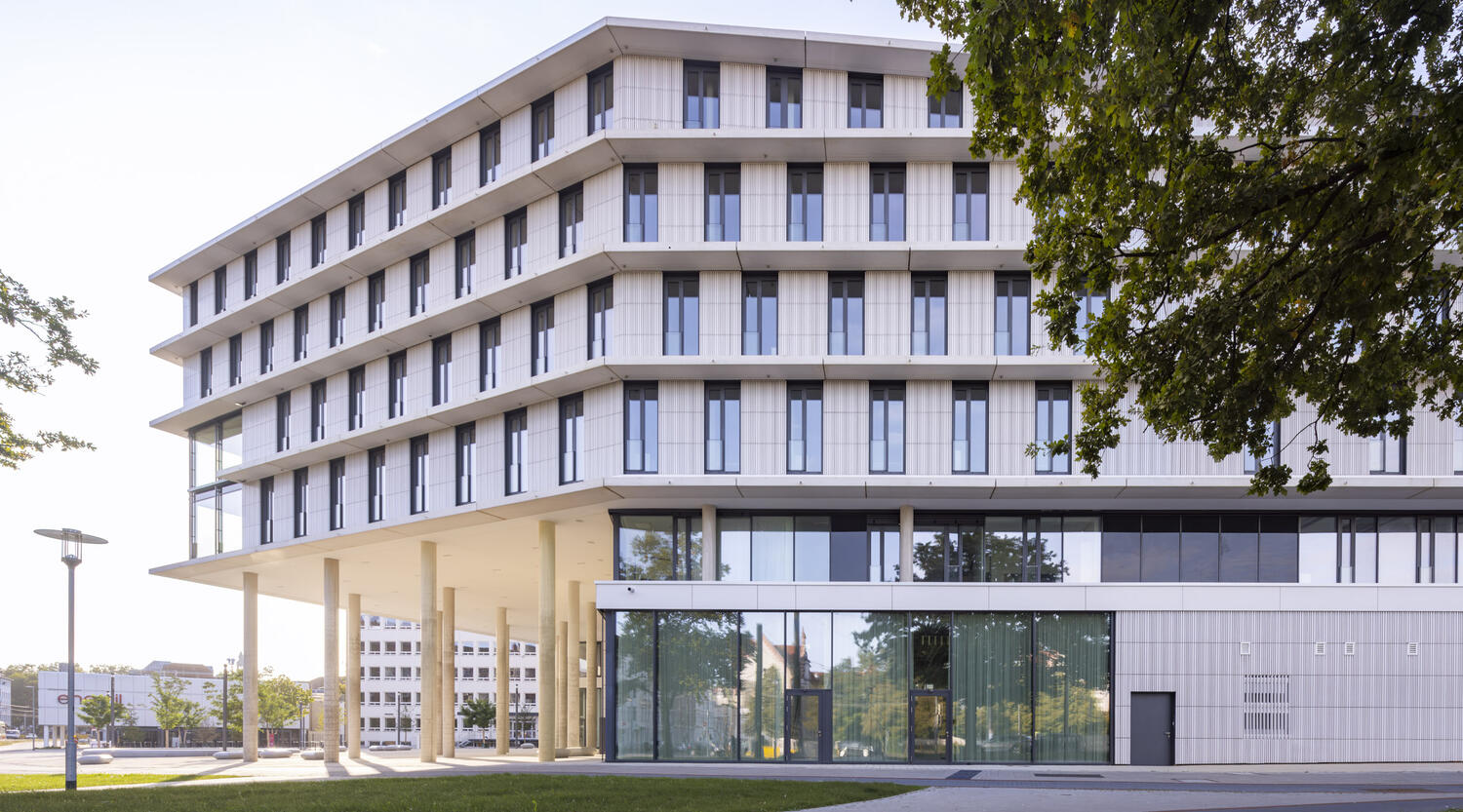
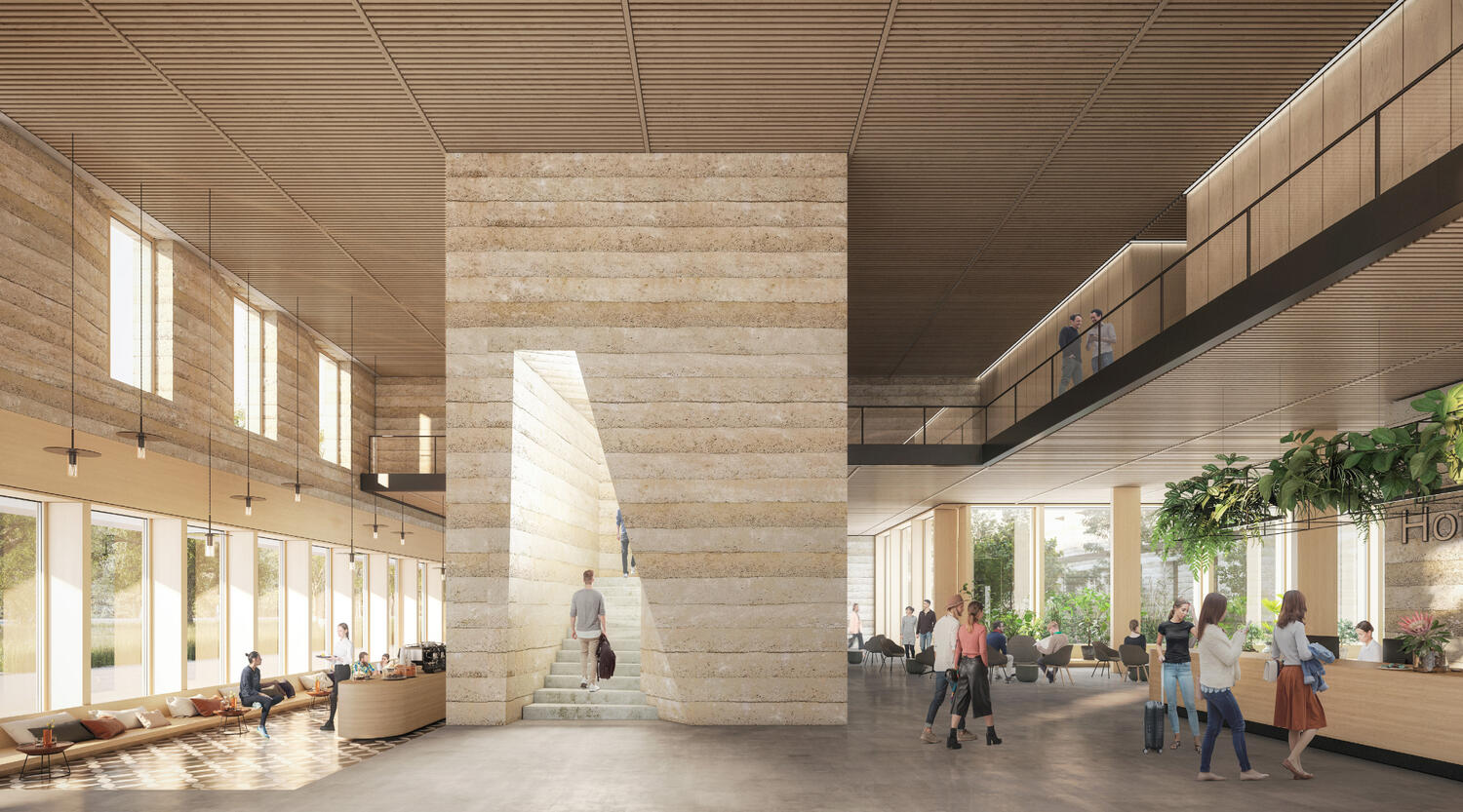
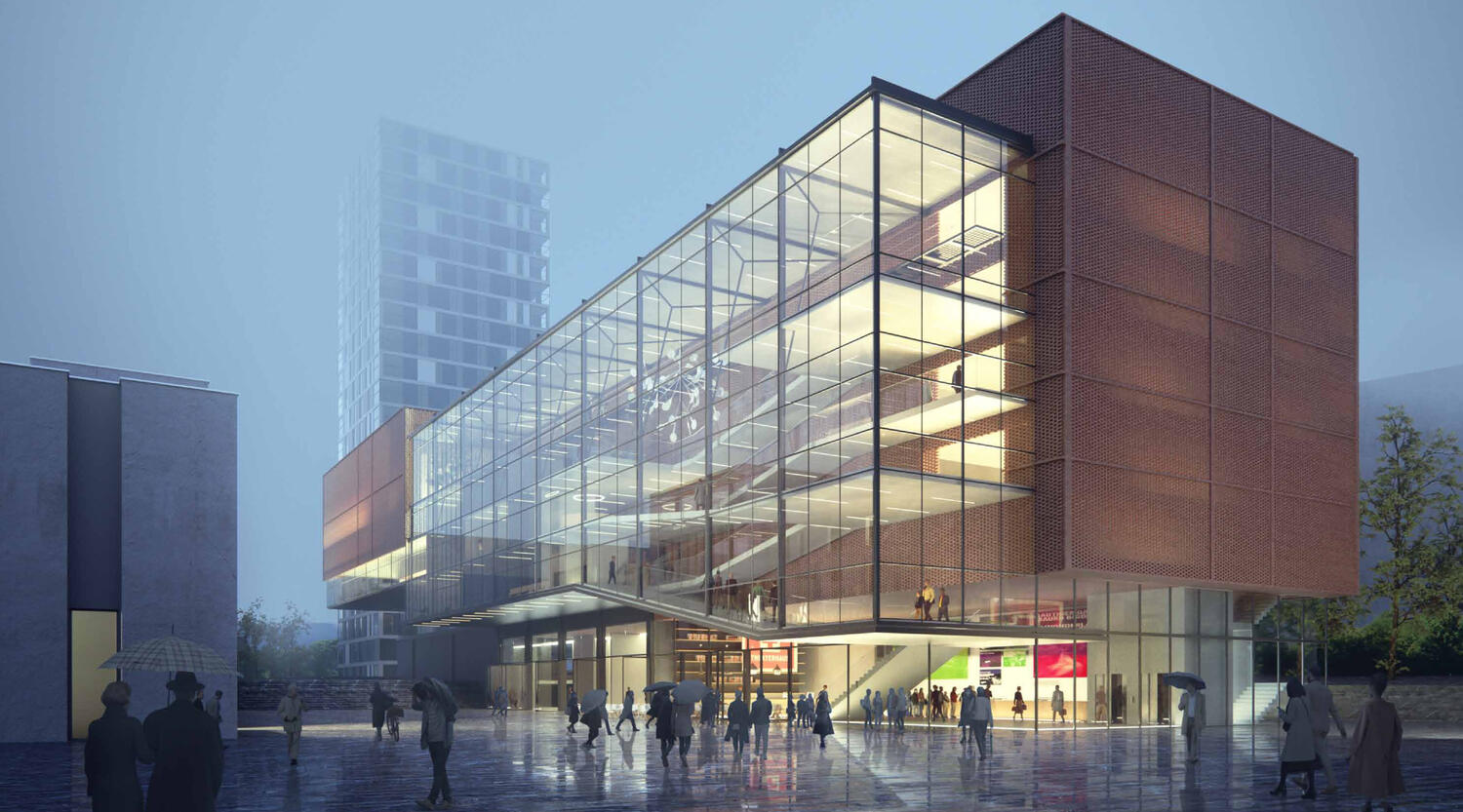
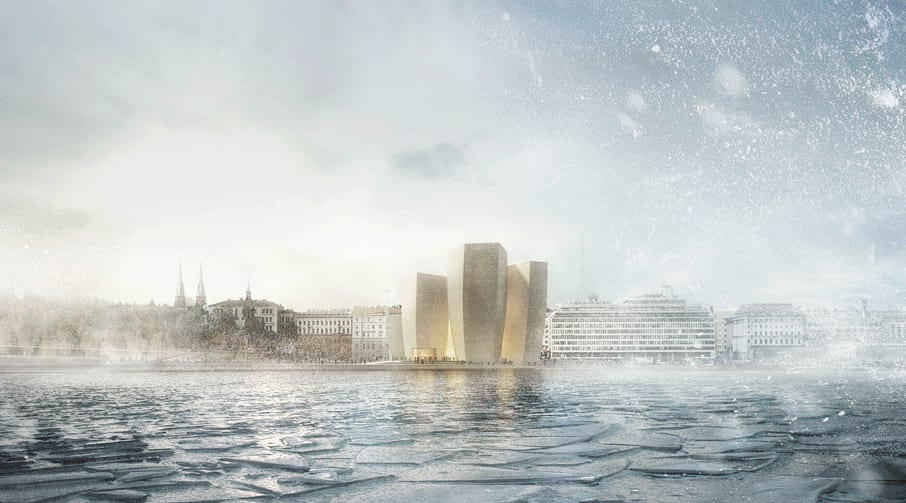
With the Smart Mobility Hub, an innovative, mixed-use building is being created in the heart of Stuttgart that will incorporate sustainable mobility, city logistics and sharing concepts, among other things. The new building aims to harmonise future and reality as well as sustainability and economic efficiency.

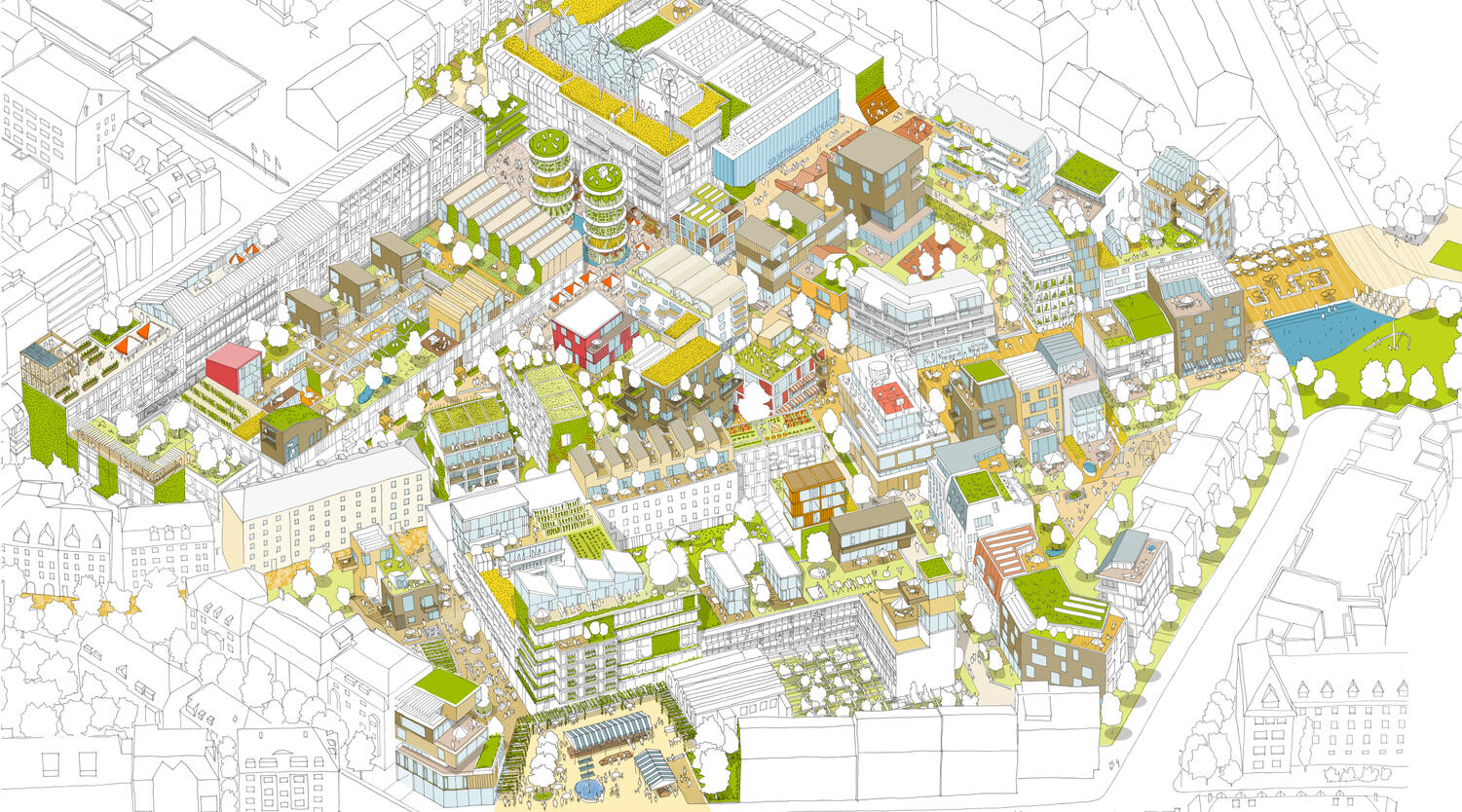
The aim of the design is to redesign the edge of the Leonhardsvorstadt neighbourhood with an excitingly structured ensemble and to expand the attractiveness of the urban building block to include the House for Film and Media and the Smart Mobility Hub with an additional building block / building structure D.
With an additional fourth building block, there is a unique opportunity for fundamental urban renewal in a central inner-city location, with a diverse range of overlapping uses for a lively and intensively used neighbourhood edge.

The newly created ensemble can symbolise Stuttgart's vision of reconciling the areas of mobility, quality of life and urban culture and shaping them for the future.
On a base connecting all uses, two buildings rhythmise the silhouette of the ensemble and take up the historical and urban structural context. The Leonhardsviertel will be connected to the city centre. The House for Film and Media, the Gustav-Siegle-Haus and a prelude to Stuttgart's cultural mile are being created around the Leonhardskirche.


The horizontal and strongly separating effect of the existing multi-storey car park is abandoned in favour of individually identifiable vertical structures. This open setting allows views from the existing buildings on Esslinger Strasse across the green area of the base building to the city centre.

The modular structure of the ensemble allows the edge of the plinth to be shifted in view of the planned redesign of the B14 with a considerably reduced traffic area, so that the successive rounding off of the street space on the basis of the competition result by ASP Architekten is easily possible.


Sustainability

The Smart Mobility Hub addresses the issues of sustainable construction, climate neutrality and climate change adaptation in city centres from different angles:
Urban planning objectives, climate change adaptation measures and the economical use of resources for construction and operation are components that can be directly assigned to the new buildings and can be directly influenced by the planning:
The urban arrangement of the buildings with the cantilever over the B14 and thus the visual reduction of the urban motorway prepares the long-term transformation of the urban space of the B14 into an urban boulevard.

The greening of the roofs and façades improves the microclimate in the urban space through evaporative cooling and the binding of fine dust and also reduces the ‘heat island effect’ for the neighbouring district. The substrate layers of the greenery on the roof and terrace reduce rainwater run-off from the built-up areas and are therefore an effective tool against more frequent heavy rainfall events.
The buildings are constructed with the aim of minimising the ecological footprint of construction and operation.

The timber construction of the upper storeys serves as a CO2 store for many decades and thus reduces the CO2 footprint of the solid components and steel beams required for structural reasons. The façade materials and insulating materials as well as the quality of the glass are carefully selected and optimised in order to take into account all aspects of thermal insulation in winter and summer as well as the grey energy content. The reusability of the timber construction also means that the mobility hub can be adapted to future forms of mobility or even comprehensively converted and dismantled. The office and commercial spaces can also be used again and again thanks to the flexible floor plans and the associated robust and flexible system technology, ensuring long-term sustainability.

The high thermal insulation standard of the buildings and the passive measures for summer heat insulation reduce the energy requirements for heating and cooling. Floor plans and façades are optimised with regard to the use of daylight and thus contribute to reduced electricity requirements for artificial lighting.

A PV system on the roof of the top floor of the timber multi-storey car park and on component C cover the annual operating power requirements of the buildings. The additional connection to the charging infrastructure means that most of the locally generated electricity can be used directly on site. A higher-level control system optimises the use of the generated electricity depending on the demand available at the time. The transmission grids are thus relieved both in terms of feed-in and in covering the demand for charging current.
Short Facts
Planing Team
Architect haascookzemmrich STUDIO2050, Stuttgart

Structural Engineer
 knippershelbig, Stuttgart

Fire Protection Consultant
 Eberl-Pacan Gesellschaft von Architekten mbH, Berlin

Building Surveyer
 Smoltcyk&Partner GmbH, Stuttgart

House Technic
 pbs Ingenieure GmbH, Stuttgart

Traffic Planner
 BS Ingenieure, Ludwigsburg

Energy Consultant 
Transsolar Energietechnik GmbH, Stuttgart

Building Physics
 knp.bauphysik Ingenieurgesellschaft mbH, Köln

Team

David Cook

Partner Freier Architekt, BA (hons), Dip. Arch (dist), RIBA, BDA

Als Projektpartner bei Behnisch Architekten war David Cook von 1995-2005 verantwortlich für das Harbourside Center (Konzert- und Tanztheater) in Bristol, Großbritannien, das Dänische Nationalarchiv (NPAC) in Kopenhagen, Dänemark, sowie für das Terrence Donnelly Center für zelluläre und biomolekulare Forschung (TDDCBR) an der Universität von Toronto, Kanada. Als Partner bei Behnisch Architekten zwischen 2005-2012 war David Cook verantwortlich für die Hilde-Domin-Schule in Herrenberg, das Nationalzentrum für Tumorerkrankungen (NCT) in Heidelberg, die Schwetzinger-Terrasse-Kindertagesstätte in Heidelberg, sowie für das Gebäude des Hauptsitzes King Abdullah Financial District (KAFD) in Riyadh, Saudi-Arabien. Er hat an einer Vielzahl von Campus- / Masterplaning-Projekten gearbeitet, darunter UC Dublin, Irland und der Sanierung des Lower Don in Toronto, Kanada. David Cook war auch Co-Kurator der sehr erfolgreichen Wanderausstellung "Ökologie, Design, Synergie" durch Deutschland.


Nach 6 Jahren der Partnerschaft gründet Cook, zusammen mit Martin Haas und Stephan Zemmrich, im April 2012 sein eigenes Büro haascookzemmrich STUDIO2050 mit Projekten im In- und Ausland.


David Cook war Belluschi-Gastprofessor für Architektur an der Universität von Oregon, USA. Er pflegt weiterhin eine enge Beziehung zu der Universität und kehrt regelmäßig für Gastvorträge an die Universität zurück.

Projects

Mobility Hub Bremerhaven

Mobility Hub Bremerhaven

An exemplary project constructed entirely from timber
YOCA

YOCA

A building that shapes the future
Town Hall Schömberg

Town Hall Schömberg

An exemplary project for the reuse of components and materials
Leibniz Innovation Centre for Sustainable Bioeconomy

Leibniz Innovation Centre for Sustainable Bioeconomy

An exemplary project for building with recycled materials and circular construction
Königstraße 1ab

Königstraße 1ab

An exemplary project for the reuse of components and materials
Cuore:NINO

Cuore:NINO

Campus HafenCity

Campus HafenCity

Nestbau⁴

Nestbau⁴

VielArten

VielArten

haascookzemmrich STUDIO2050 are awarded the contract for the VielArten building community project in Tübingen
Rammed earth residential house in Heilbronn, Germany

Rammed earth residential house in Heilbronn, Germany

haascookzemmrich STUDIO2050 are planing a rammed earth residential house at the Neckarbogen in Heilbronn, Germany.

Giancarlo Munoz Ramirez

Nach seinem Bachelor in Architektur an der Universität von Costa Rica arbeitete Giancarlo als freiberuflicher Architekt. Dabei schloss er mehrere Wohnungsbau sowie Firmenprojekte ab. Zudem arbeitete er an der Universität von Costa Rica als Tutor für Architekturdesign.


2018 erlangte er einen Doppelabschluss in M Sc. „Integrated Urbanism and Sustainable Design" von der Universität Stuttgart und der Ain Shams University in Kairo.


Giancarlo Munoz Ramirez ist seit 2018 bei haascookzemmrich STUDIO2050 tätig. Als Teil der BIM-Abteilung des Büros war Giancarlo an den Projekten iZWO Enercity, Hannover und Gesundhaus am Schliersee beteiligt. Er hat an Designwettbewerben wie dem Neubau der Umweltbank in Nürnberg und dem Neubau des MobilityHub in Stuttgart teilgenommen.


Nachdem Giancarlo Teil des Planungsteams für den Neubau des MobilityHub in Stuttgart war ist er seit 2025 Projektleiter Architektur für unser Projekt YOCA in Wien

Projects

YOCA

YOCA

A building that shapes the future
Town Hall Schömberg

Town Hall Schömberg

An exemplary project for the reuse of components and materials
Enercity

Enercity

The new corporate headquarters of Enercity in Hanover, designed by haas cook zemmrich STUDIO2050, has been opened.
Smart Mobility Hub

Smart Mobility Hub

With the Smart Mobility Hub, an innovative, mixed-use building is being created in the heart of Stuttgart that will incorporate sustainable mobility, city logistics and sharing concepts, among other things.
Health resort Schliersee

Health resort Schliersee

Health resort at Schliersee by haas cook zemmrich STUDIO2050
Competition "the new Stöckach"

Competition "the new Stöckach"

The area of so called Stöckach in the eastern part of Stuttgart was supposed to be rethought. Our contribution made it in the second stage of the competition.

Martin Haas

Partner Freier Architekt BDA / Miller Chair University of Pennsylvania

Martin Haas hat in Stuttgart und London Architektur studiert. Von 1995-2012 war Martin Haas bei Behnisch Architekten tätig. Nach dem Gewinn einiger Wettbewerbe war er unter anderem von 1996-2002 mit Jörn Genkel als Projektleiter für die NORD/LB in Hannover verantwortlich. Danach arbeitete Haas an internationalen Projekten in Dubai, Italien und Frankreich bevor er 2005 Partner in Behnisch Architekten wurde. Als Partner war Martin Haas verantwortlich für das Stadtentwicklungsprojekt Riverparc in Pittsburgh, für Labor und Büroprojekte in Paris, für das Haus im Haus in der Handelskammer Hamburg, die Unilever Zentrale und den Marco Polo Tower in Hamburg, sowie für das Ozeaneum in Stralsund. Martin Haas war auch Co-Kurator der sehr erfolgreichen Wanderausstellung "Ökologie, Design, Synergie".


Den Schwerpunkt seiner Arbeit legt Haas auf die Entwicklung innovativer, nachhaltiger Architektur. Nach 6 Jahren der Partnerschaft gründet Haas, zusammen mit David Cook und Stephan Zemmrich im April 2012 sein eigenes Büro haascookzemmrich STUDIO2050 mit Projekten im In und Ausland.


Als Mitbegründer des DGNB ist Martin Haas Mitglied des Präsidiums, und seit 2013 deren Vizepräsident.Seit 2008 hat er eine Gastprofessur and der University of Pennsylvania in Philadelphia, USA sowie an der Universita di Sassari in Italien inne.


Martin Haas ist Mitglied des Gestaltungsbeirats in Konstanz und Offenburg. Seit 2020 ist er ehrenamtliches Mitglied des Konvents der Baukultur.

Projects

Mobility Hub Bremerhaven

Mobility Hub Bremerhaven

An exemplary project constructed entirely from timber
YOCA

YOCA

A building that shapes the future
Town Hall Schömberg

Town Hall Schömberg

An exemplary project for the reuse of components and materials
Leibniz Innovation Centre for Sustainable Bioeconomy

Leibniz Innovation Centre for Sustainable Bioeconomy

An exemplary project for building with recycled materials and circular construction
Königstraße 1ab

Königstraße 1ab

An exemplary project for the reuse of components and materials
Cuore:NINO

Cuore:NINO

Campus HafenCity

Campus HafenCity

Nestbau⁴

Nestbau⁴

Rapunzel Naturkost Visitor Center

Rapunzel Naturkost Visitor Center

Visiting Rapunzel: haascookzemmrich STUDIO2050 is planning the new Visitor Center for the head quarters of the organic manufacturer Rapunzel Naturkost GmbH in Legau.
VielArten

VielArten

haascookzemmrich STUDIO2050 are awarded the contract for the VielArten building community project in Tübingen

Sandro Ruiu

Partner, Freier Architekt

Nach seiner Ausbildung zum Bauzeichner im Hochbau studierte Sandro Architektur in Biberach (DE), Wien (AT) und Tokio (JP). Während und nach dem Studium war er in mehreren Architekturbüros in Süddeutschland und Österreich tätig.

Seit 2014 ist Sandro Teil von haascookzemmrich STUDIO2050, wo er an der Entwicklung zahlreicher Entwurfsprojekte mitgewirkt hat – von kulturellen und öffentlichen Bauten bis hin zu innovativen Konzepten für nachhaltiges Bauen und urbane Mobilität. Zu seinen Projekten zählen unter anderem das Guggenheim Museum in Helsinki, das Film- und Medienhaus Stuttgart, die Radstation Tübingen, das Lehmahus Heilbronn sowie die Quartiersentwicklung am Stöckach in Stuttgart.

Nach der Realisierung des Logistikzentrums mit Arbeitswelt in Walldorf übernahm Sandro gemeinsam mit Felix Wolf die Projektleitung für den Neubau des Smart Mobility Hub in Stuttgart.


Aktuell betreut Sandro das Projekt Zukunftsmarkt für Alnatura sowie die Machbarkeitsstudie Neue Mitte Littenweiler-Waldsee.
Parallel ist Sandro als Honorarlehrkraft an der Universität Stuttgart am Institut für Städtebau tätig.


Seit 2025 ist Sandro Partner und leitet das Büro haascookzemmrich STUDIO2050 in Landau.


Projects

Rammed earth residential house in Heilbronn, Germany

Rammed earth residential house in Heilbronn, Germany

haascookzemmrich STUDIO2050 are planing a rammed earth residential house at the Neckarbogen in Heilbronn, Germany.
Smart Mobility Hub

Smart Mobility Hub

With the Smart Mobility Hub, an innovative, mixed-use building is being created in the heart of Stuttgart that will incorporate sustainable mobility, city logistics and sharing concepts, among other things.
Spring Park Valley Hotel

Spring Park Valley Hotel

Haascookzemmrich Studio2050 is tasked with a hotelproject made of rammed earth in Bad Vilbel near Frankfurt including 250 guest rooms.
Competition "Extension for the Theaterhaus"

Competition "Extension for the Theaterhaus"

The decision was made in the architectural competition, that was announced throughout europe for the extension of the so called Theaterhaus in Stuttgart. Our contribution transitioned into the final round of judgement where 9 of the 19 teams remained.​
Promega

Promega

The project "Promega Under One Roof" unites all functional areas and subsidiaries of Promega Corp under a new single roof. Currently these functions are spread under different buildings in Mannheim.
Competition "the new Stöckach"

Competition "the new Stöckach"

The area of so called Stöckach in the eastern part of Stuttgart was supposed to be rethought. Our contribution made it in the second stage of the competition.
Bike Station with a Cafe at Europaplatz

Bike Station with a Cafe at Europaplatz

Bike Station with a Cafe at Europaplatz in Tübingen / Germany
Hofgut Oberfeld

Hofgut Oberfeld

haascookzemmrich STUDIO2050 entwickeln ein Erweiterungs- und Sanierungskonzept für den alten Kuhstall auf dem Hofgut Oberfeld in Darmstadt
Guggenheim

Guggenheim

Eine elfköpfige Jury hat unter 1715 eingereichten Entwürfen aus 77 Nationen sechs Finalisten ausgewählt. Als einziges deutsches Büro war haascookzemmrich STUDIO2050 mit dabei!
House of Film and Media, Stuttgart

House of Film and Media, Stuttgart

haascookzemmrich STUDIO2050 are developing together with the Association for Film and Media a new House of Film and Media in Stuttgart.

Stephan Zemmrich

Partner Freier Architekt BDA

Stephan Zemmrich hat nach seiner Ausbildung als Tischler in Delft und in Stuttgart Architektur studiert. Nach Tätigkeiten in Rotterdam und Indien bei dem späteren Pritzker Preisträger Balkrishna Doshi, war Stephan Zemmrich seit 2005 in Behnisch Architekten als Architekt und Projektleiter tätig. Neben dem Unilever Gebäude in Hamburg ist hier auch das Dorotheenquartier Stuttgart zu nennen bei dem Zemmrich für den Wettbewerbsentwurf und den Projektstart verantwortlich zeichnet. 


2012 hat sich Stephan Zemmrich mit Martin Haas und David Cook selbständig gemacht und das Büro haascookzemmrich STUDIO2050 gegründet.

Projects

Mobility Hub Bremerhaven

Mobility Hub Bremerhaven

An exemplary project constructed entirely from timber
YOCA

YOCA

A building that shapes the future
Town Hall Schömberg

Town Hall Schömberg

An exemplary project for the reuse of components and materials
Leibniz Innovation Centre for Sustainable Bioeconomy

Leibniz Innovation Centre for Sustainable Bioeconomy

An exemplary project for building with recycled materials and circular construction
Königstraße 1ab

Königstraße 1ab

An exemplary project for the reuse of components and materials
Enercity

Enercity

The new corporate headquarters of Enercity in Hanover, designed by haas cook zemmrich STUDIO2050, has been opened.
Cuore:NINO

Cuore:NINO

Campus HafenCity

Campus HafenCity

Nestbau⁴

Nestbau⁴

VielArten

VielArten

haascookzemmrich STUDIO2050 are awarded the contract for the VielArten building community project in Tübingen

Florian Stiegler

M.Sc. Architekt im Praktikum

Nach seinem erfolgreichen Masterabschluss an der Universität Stuttgart ist Florian seit 2021 bei haascookzemmrich STUDIO2050 tätig.


Neben der Bearbeitung von erfolgreichen Wettbewerbsentwürfen ist Florian Teil des Projektteams Smart Mobility Hub Stuttgart.

Projects

Smart Mobility Hub

Smart Mobility Hub

With the Smart Mobility Hub, an innovative, mixed-use building is being created in the heart of Stuttgart that will incorporate sustainable mobility, city logistics and sharing concepts, among other things.

Afroditi Pinaka

Dipl.- Ing. Architektin im Praktikum

Afroditi studierte an der Demokrit Universität Thrakien in Griechenland Architektur. Während ihres Diplomstudiums absolvierte sie ein Auslandsjahr an der Universität Camilo Jose Cela in Madrid, Spanien.

Nach 5-jähriger Tätigkeit in Architekturbüros in Athen und Karlsruhe arbeitet Afroditi seit 2021 als Architektin im Praktikum (AiP) bei haascookzemmrich STUDIO2050. Zu Ihrem Tätigkeitsbereich gehört die Entwicklung und Mitbetreuung innovativer Wettbewerbsvorschläge

Projects

Smart Mobility Hub

Smart Mobility Hub

With the Smart Mobility Hub, an innovative, mixed-use building is being created in the heart of Stuttgart that will incorporate sustainable mobility, city logistics and sharing concepts, among other things.