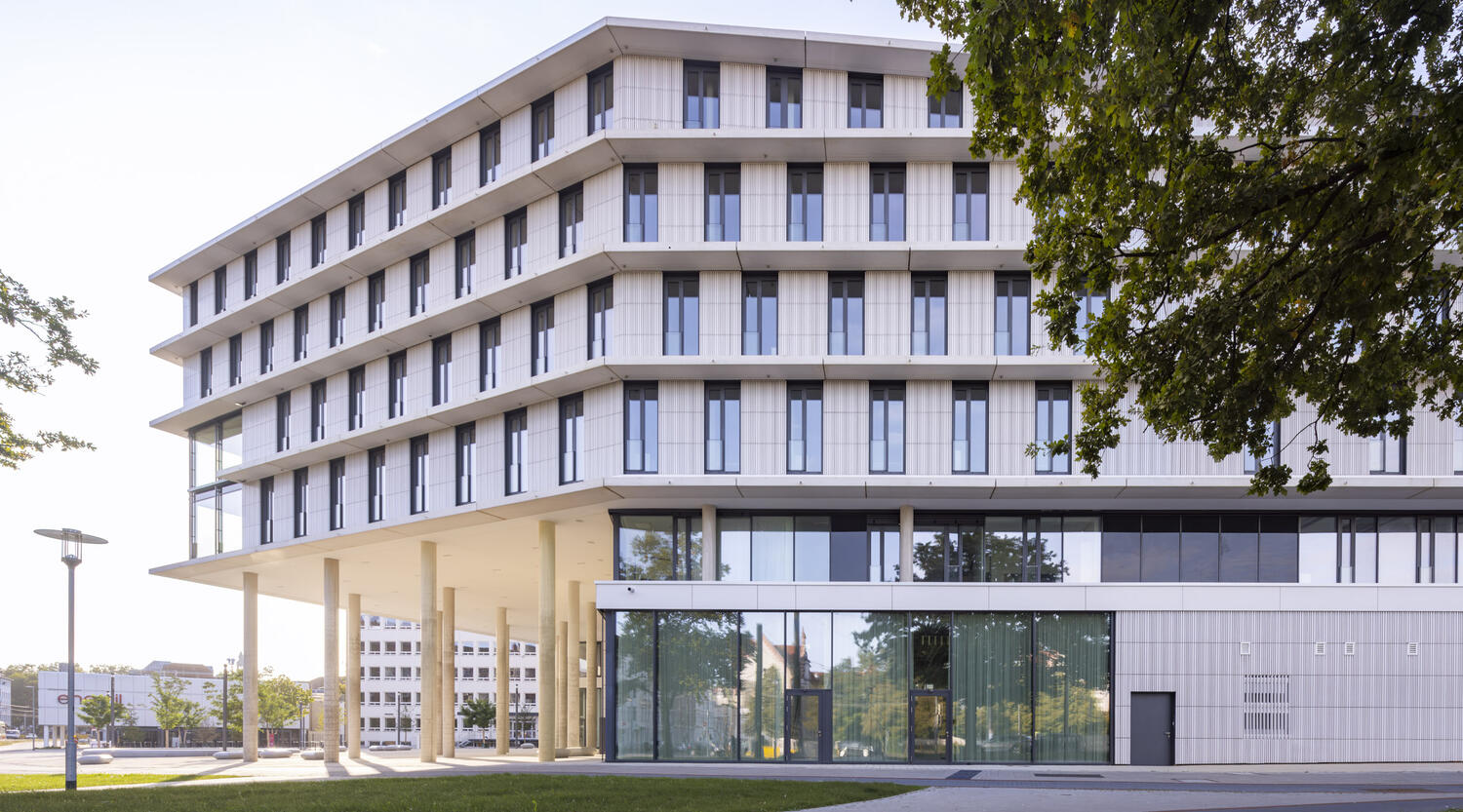
New Construction of a Mobility Hubs for the Werftquartier
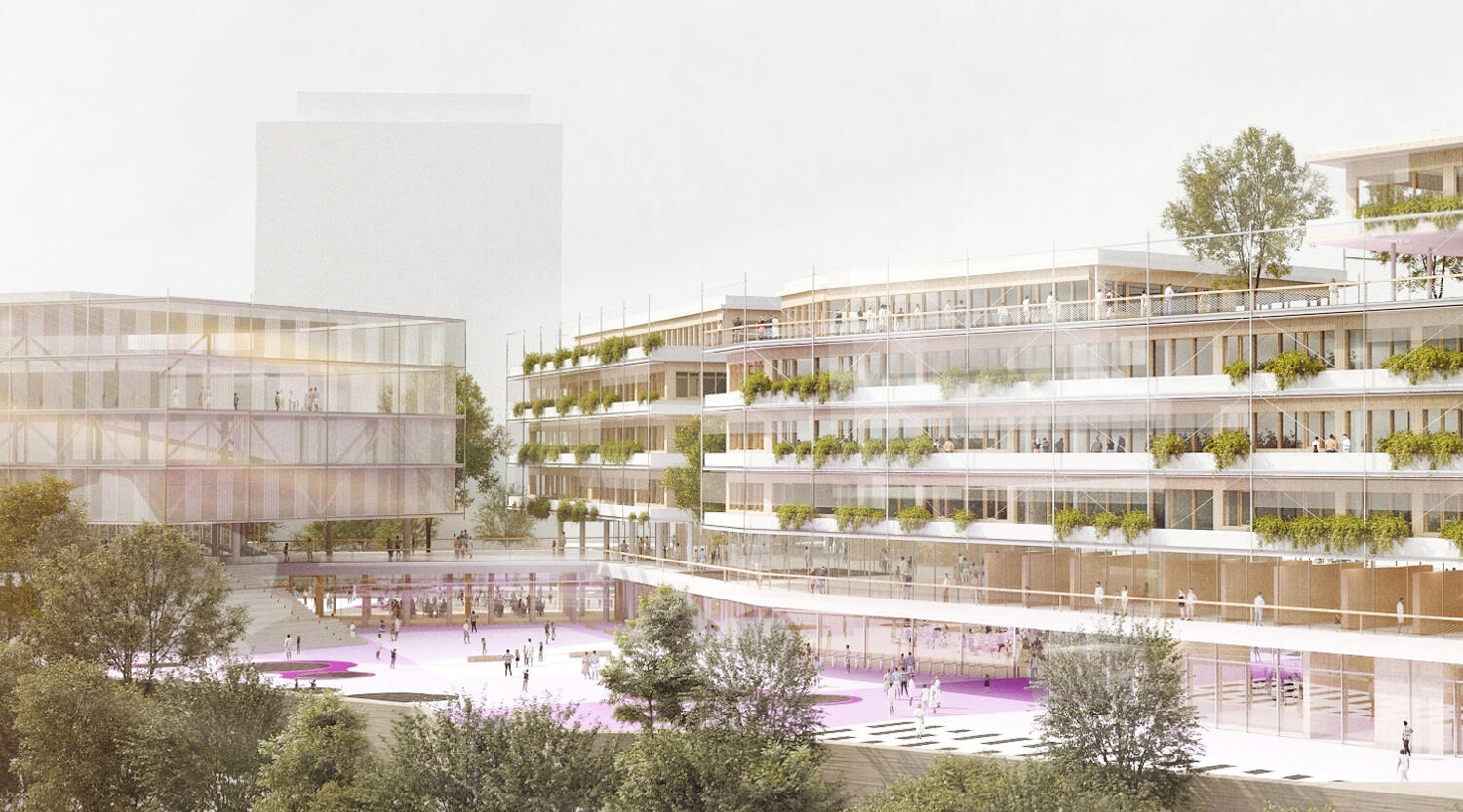
The location of the new hub in the shipyard district, at the transition from the quay to the city park, plays an important role in connecting different parts of the city.
The high-profile ground floor engages with the location on all sides. In addition to mobility services, a café, a bakery and a large grocery store will ensure high visitor traffic. Deliveries and garage access are concentrated and minimised on the eastern side of the building. The chosen one-way street principle and the length of the building allow access and exit to be arranged one after the other. This creates a highly efficient parking system.


All of the Mobility Hub's façades serve either to generate energy or to keep the air clean. The wooden parking cube is equipped with different systems depending on its orientation. On the north side, the first BA1 building houses a walk-in ‘street art gallery’, which will become a special attraction for the area thanks to its removable scaffolding.
The high-efficiency modules on the roof provide sufficient solar energy for the Mobility Hub to operate independently.

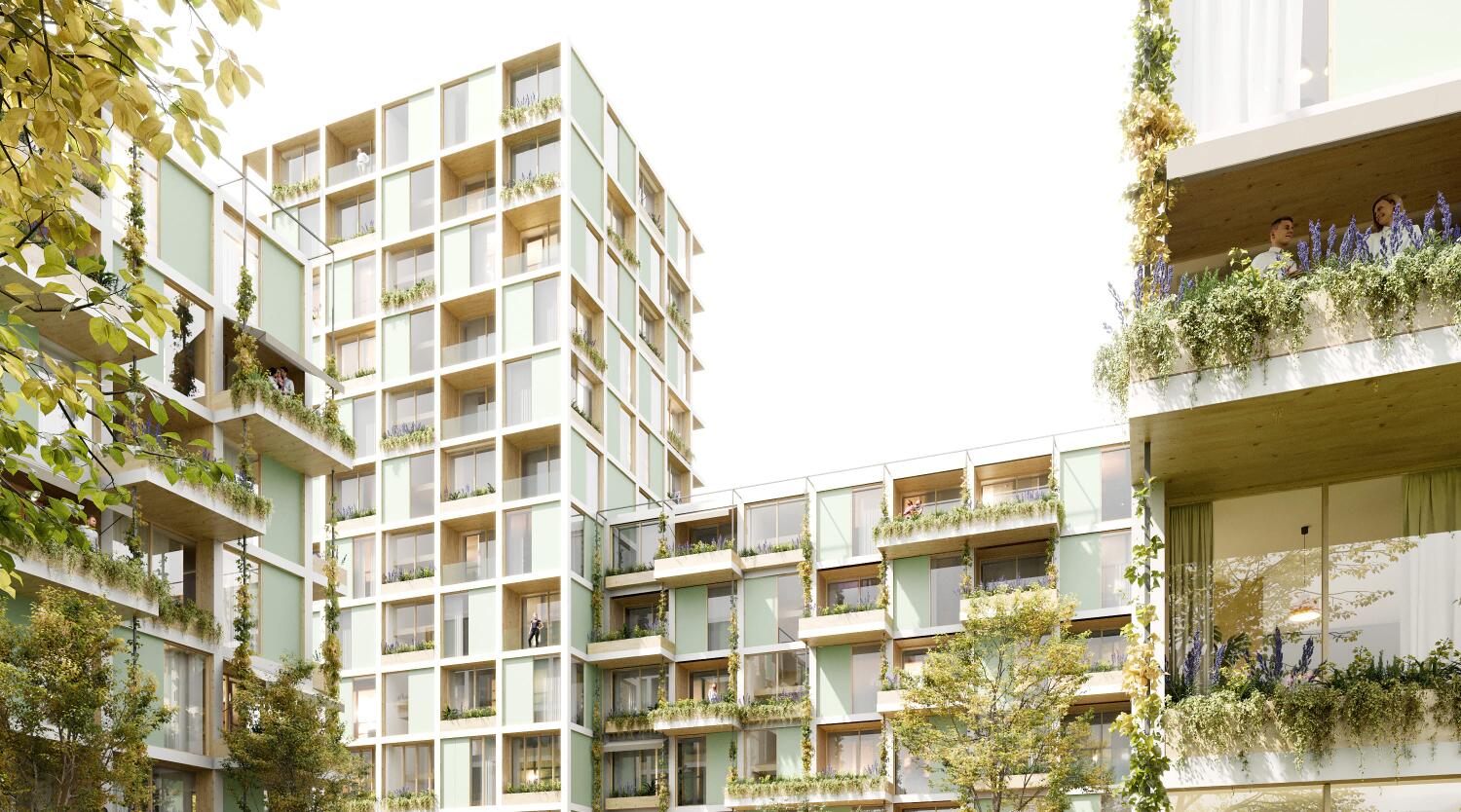
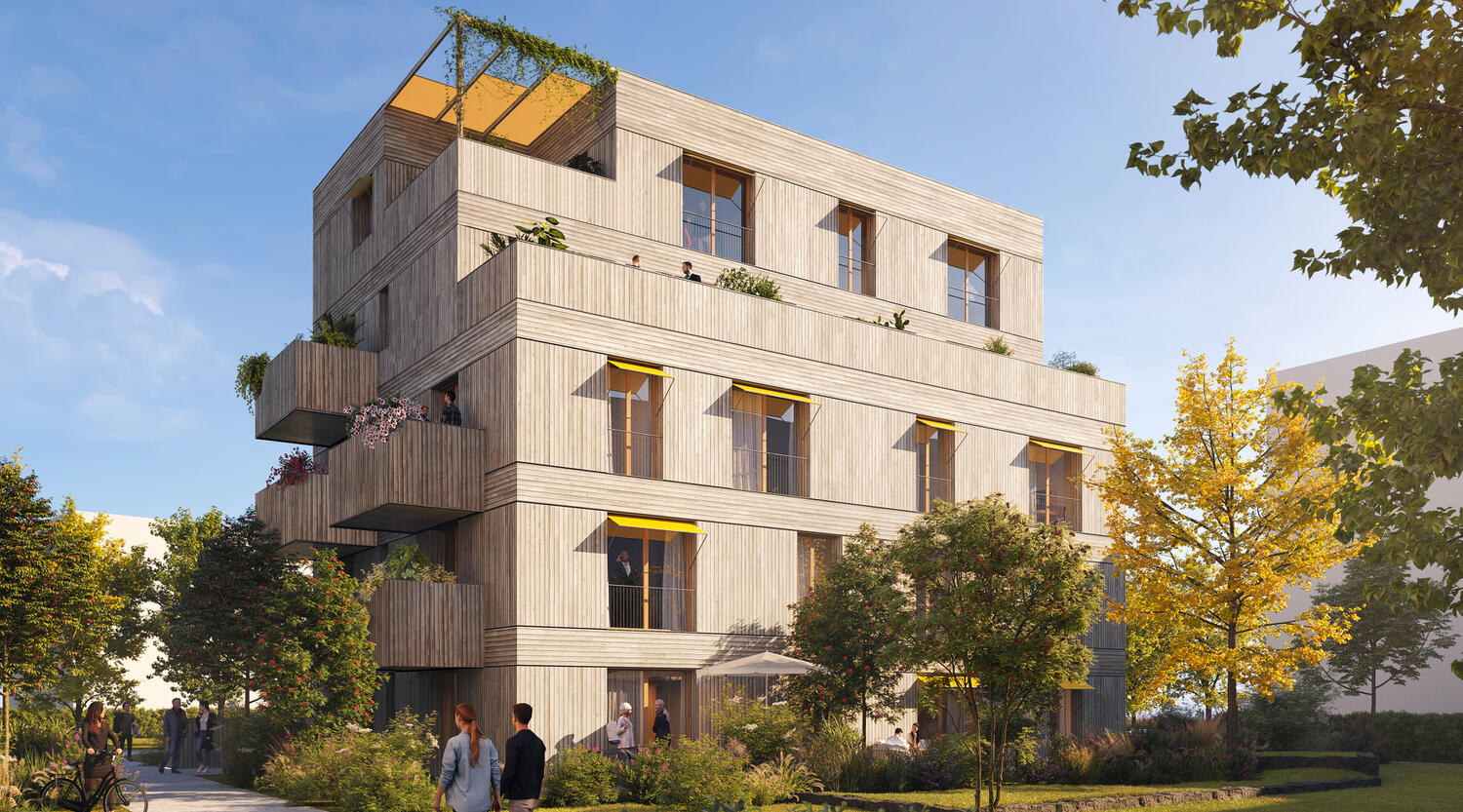
Coming from the quay, the wooden hybrid construction of the residential shelving and the hanging gardens of the mobility hub define the special character and ecological ethos of the ensemble.
The geometric interplay of the deeply staggered green balconies contrasts excitingly with the structural clarity of the building sculpture.
The desired apartment typologies can be easily represented by the change in the construction grid.
The ensemble's special hybrid wood construction also offers a unique living atmosphere inside. Clay-plastered walls, wood and textiles create a feel-good atmosphere in harmony with nature. The green and solar-powered roof surfaces, the timber construction, the restrained glazing and the special geometry convey the image of a sensibly used building volume. In our view, this is the basis for a sustainable and thus resource-saving construction method and a good addition to the workshop character of the adjacent mobility hall.
The new building is designed entirely in timber construction and does not use any composite materials.
Only the foundations, components in contact with the ground and the bases of the columns are made of reinforced concrete.
A prerequisite for an economical and functional load-bearing structure made of timber is a continuous load-bearing grid without any supports or load deflections. The load-bearing principle is easy to understand: The parking areas are spanned without supports using a pincer construction. Support axes are provided on the long sides of the façade. In addition, there is a load-bearing axis that divides the floor plan into two equal parts.
The pincer elements are glulam trusses. Their spacing is identical to the axes of the parking spaces, so that the supporting structure visually sorts the floor plan.
A cross-laminated timber panel is installed above the trusses. This is bolted crosswise to the trusses, creating a shear-resistant connection. This results in a T-shaped cross-section that is 40% more rigid than a purely rectangular cross-section. The shear-resistant connection between the panels also creates the structurally necessary ceiling slab.
The ceiling slab transfers the bracing loads from the wind to the bracing wall areas. These are distributed statically on the outer surfaces in the floor plan so that no load concentrations arise. The ‘wall panels’ are constructed using diagonal pressure struts.
The weathered side surfaces of the supports and the front sides of the beams are protected with sacrificial timber. This protective timber can be replaced as needed.
The residential building is also proposed to be constructed entirely of wood: in this case, the solid wood ceilings span the length of the building and are supported by wooden cross bulkheads. Both the ceilings and the walls are made of softwood CLT elements. The bracing is again provided by the ceiling panels and wall panels.


BIS Bremerhavener Gesellschaftfür Investitionsförderung undStadtentwicklung mbH
Gross floor area (1st construction phase): approx. 14,000 sqm
Floor area ratio (without 2nd construction phase): 0.6
Floor area ratio (with 2nd construction phase): 0.75
Parking spaces: approx. 490
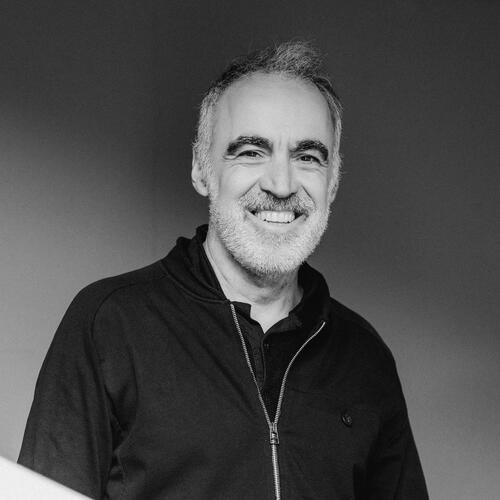
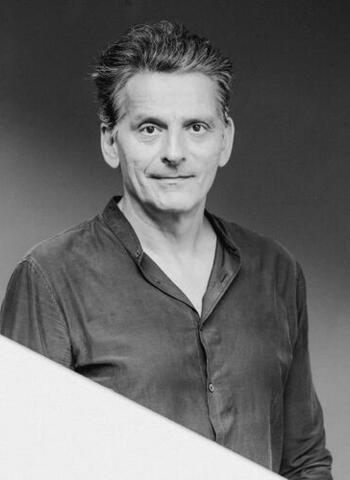
Als Projektpartner bei Behnisch Architekten war David Cook von 1995-2005 verantwortlich für das Harbourside Center (Konzert- und Tanztheater) in Bristol, Großbritannien, das Dänische Nationalarchiv (NPAC) in Kopenhagen, Dänemark, sowie für das Terrence Donnelly Center für zelluläre und biomolekulare Forschung (TDDCBR) an der Universität von Toronto, Kanada. Als Partner bei Behnisch Architekten zwischen 2005-2012 war David Cook verantwortlich für die Hilde-Domin-Schule in Herrenberg, das Nationalzentrum für Tumorerkrankungen (NCT) in Heidelberg, die Schwetzinger-Terrasse-Kindertagesstätte in Heidelberg, sowie für das Gebäude des Hauptsitzes King Abdullah Financial District (KAFD) in Riyadh, Saudi-Arabien. Er hat an einer Vielzahl von Campus- / Masterplaning-Projekten gearbeitet, darunter UC Dublin, Irland und der Sanierung des Lower Don in Toronto, Kanada. David Cook war auch Co-Kurator der sehr erfolgreichen Wanderausstellung "Ökologie, Design, Synergie" durch Deutschland.
Nach 6 Jahren der Partnerschaft gründet Cook, zusammen mit Martin Haas und Stephan Zemmrich, im April 2012 sein eigenes Büro haascookzemmrich STUDIO2050 mit Projekten im In- und Ausland.
David Cook war Belluschi-Gastprofessor für Architektur an der Universität von Oregon, USA. Er pflegt weiterhin eine enge Beziehung zu der Universität und kehrt regelmäßig für Gastvorträge an die Universität zurück.
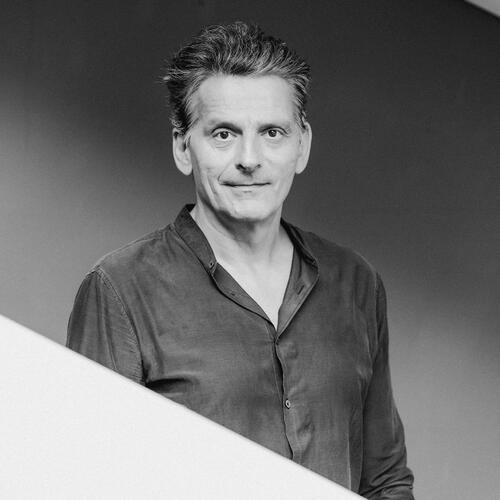
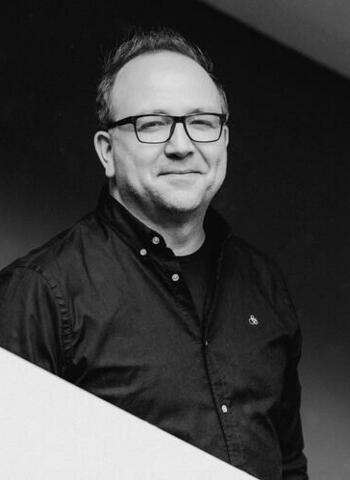
Martin Haas hat in Stuttgart und London Architektur studiert. Von 1995-2012 war Martin Haas bei Behnisch Architekten tätig. Nach dem Gewinn einiger Wettbewerbe war er unter anderem von 1996-2002 mit Jörn Genkel als Projektleiter für die NORD/LB in Hannover verantwortlich. Danach arbeitete Haas an internationalen Projekten in Dubai, Italien und Frankreich bevor er 2005 Partner in Behnisch Architekten wurde. Als Partner war Martin Haas verantwortlich für das Stadtentwicklungsprojekt Riverparc in Pittsburgh, für Labor und Büroprojekte in Paris, für das Haus im Haus in der Handelskammer Hamburg, die Unilever Zentrale und den Marco Polo Tower in Hamburg, sowie für das Ozeaneum in Stralsund. Martin Haas war auch Co-Kurator der sehr erfolgreichen Wanderausstellung "Ökologie, Design, Synergie".
Den Schwerpunkt seiner Arbeit legt Haas auf die Entwicklung innovativer, nachhaltiger Architektur. Nach 6 Jahren der Partnerschaft gründet Haas, zusammen mit David Cook und Stephan Zemmrich im April 2012 sein eigenes Büro haascookzemmrich STUDIO2050 mit Projekten im In und Ausland.
Als Mitbegründer des DGNB ist Martin Haas Mitglied des Präsidiums, und seit 2013 deren Vizepräsident.Seit 2008 hat er eine Gastprofessur and der University of Pennsylvania in Philadelphia, USA sowie an der Universita di Sassari in Italien inne.
Martin Haas ist Mitglied des Gestaltungsbeirats in Konstanz und Offenburg. Seit 2020 ist er ehrenamtliches Mitglied des Konvents der Baukultur.

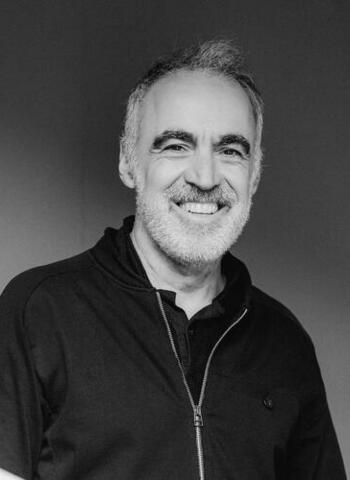
Stephan Zemmrich hat nach seiner Ausbildung als Tischler in Delft und in Stuttgart Architektur studiert. Nach Tätigkeiten in Rotterdam und Indien bei dem späteren Pritzker Preisträger Balkrishna Doshi, war Stephan Zemmrich seit 2005 in Behnisch Architekten als Architekt und Projektleiter tätig. Neben dem Unilever Gebäude in Hamburg ist hier auch das Dorotheenquartier Stuttgart zu nennen bei dem Zemmrich für den Wettbewerbsentwurf und den Projektstart verantwortlich zeichnet.
2012 hat sich Stephan Zemmrich mit Martin Haas und David Cook selbständig gemacht und das Büro haascookzemmrich STUDIO2050 gegründet.

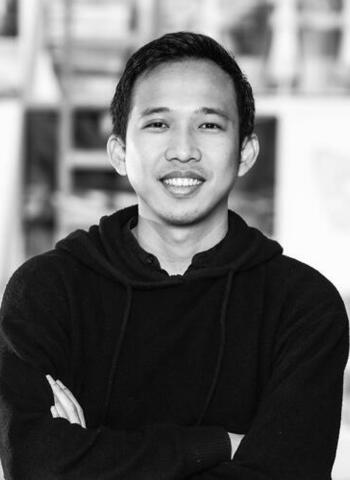
Indra studierte Architekturingenieurwesen an der Parahyangan Catholic University in Bandung - Indonesien und erhielt den Best Design Award für sein Bachelor-Abschlussprojekt. Nach zwei Jahren praktischer Tätigkeit als Architekt in Indonesien absolvierte er seinen Master of Advanced Studies in Architecture und digitaler Fabrikation an der ETH Zürich. Seine Diplomarbeit "Mesh Mould Earth Construction" ist eine Adaption der Mesh Mould Technologie, die Stahl und Beton durch Bambus und Lehmmaterial ersetzt.
Seit 2021 ist Indra bei haascookzemmrich STUDIO2050 und verfügt über umfangreiche Erfahrungen mit Designwettbewerben. Seit 2022 ist Indra Teil des Projektteams für den Campus HafenCity in Hamburg.

Nach seinem mit mehreren Preisen ausgezeichneten Bachelorstudium an der Hochschule für Technik Stuttgart gründete Hoan 2019 mit Vu Nhat Linh das DMH Studio. Er entwarf und realisierte ein Bürogebäude für die AMA Die Casting Company. 2020 begann er seinen Master an der Universität Stuttgart, den er 2023 mit Auszeichnung abschloss. Während seines Masterstudiums war Hoan seit 2021 wertvolle Erfahrungen als Werkstudent bei haascookzemmrich STUDIO2050.
Seit 2024 ist Hoan als Architekt im Praktikum bei haascookzemmrich STUDIO2050, aktuell mit dem Fokus auf die Entwicklung und Betreuung innovativer Wettbewerbskonzepte.

Ilhan studierte seinen Bachelor of Science in Architektur am Izmir Institute of Technology in der Türkei mit einem Auslandssemester an der Fachhochschule Koblenz. Nach einiger Zeit als freiberuflicher Architekt in Großbritannien studierte Ilhan seinen MSc in Architectur - Building Architecture an der Politecnico di Milano in Italien, den er mit cum laude abschloss.
Seit 2022 war Ilhan erst als Praktikant während des Studiums und ist seit 2023 als Architekt im Praktikum bei haascookzemmrich STUDIO2050. Zu seinem Tätigkeitsbereich gehört die Entwicklung und Mitbetreuung innovativer Wettbewerbsvorschläge und die Unterstützung der BIM Integration. Seit 2023 arbeitet er am Projekt für DHL Express GmbH und seit 2024 ist Ilhan Teil des Projektteams Königstraße 1ab. Seit 2025 ist Ilhan BIM Koordinator für den Mobility Hub in Bremerhaven.

Sophie absolvierte ihren Bachelor- und Masterstudiengang in Architektur an der SRH in Heidelberg und an der TU München. Nach dem Studium war Sophie zwei Jahre im Studio Precht tätig
Seit 2025 arbeitet Sophie als Architektin im Praktikum (AiP) bei haascookzemmrich STUDIO2050. Aktuell ist sie im Projekt Rathaus Schömberg tätig

Cathleen studierte Architektur an der Hochschule für Technik in Stuttgart. Während ihres Studiums absolvierte sie ein Auslandspraktikum bei De Zwarte Hond in Rotterdam und arbeitete als Werksstudentin bei H4a Architekten in Stuttgart.
Seit 2025 arbeitet Cathleen als Architektin im Praktikum (AiP) bei haascookzemmrich STUDIO2050. Zu ihrem Tätigkeitsbereich gehört die Entwicklung und Mitbetreuung innovativer Wettbewerbsvorschläge. Aktuell ist sie Projektleiterin bei unserem Projekt Lange Straße 54.

Nach seinem Architekturstudium an der Hochschule Würzburg-Schweinfurt arbeitete Alexander 6 Jahre bei h4a in Stuttgart.
Seit 2025 ist Alexander bei haas cook zemmrich STUDIO2050 tätig und ist Projektleiter im Projekt Mobility Hub Bremerhaven.